
Considering The Lord of the Rings is the third-highest-selling book of all time (excluding religious texts), it feels like an article such as this need not be written about a novel as historically popular and culturally relevant as J.R.R. Tolkien’s masterpiece of hobbits, wizards, orcs, and otherworldly beings.
However, I have yet to personally meet someone my age who has admitted to actually reading it. Sure, some have seen the movies, but—simply put—it’s just not the same. I encourage you to engage in what I believe to be the greatest example of the innate goodness present in all of us.
The Lord of the Rings is centered around a hobbit, Frodo, and his quest to destroy the One Ring, of which I wear a replica on my finger. However, his is truly magic and holds a malevolent nature that corrupts the heart of its wearer and those around them while slowly taking over its host. It is constantly encouraging Frodo to pull it out of his pocket and obsess over it in the hopes of manipulating him. Thank goodness we have nothing in our lives that resembles this.
Frodo is accompanied by his fellowship, consisting of three other hobbits, a wizard, an elf, a dwarf, and two men, and is opposed by the evil lord Sauron and his army of orcs and other monstrous creatures. While Middle-earth is one of the most beautiful, dense, and intricate fictional worlds ever created, The Lord of the Rings truly shines in its humanity, even if the majority of its characters are either three feet tall, have pointy ears, or eat man-flesh.
Throughout his journey, Frodo continuously faces the worst his world has to offer while his innocence dies and his mind is slowly being taken over by the Ring. He is rarely spared any comfort, whether it is in the form of food, water, or a break from his pain. But Frodo persists not because he seeks adventure, or even so that he may survive—he repeatedly recognizes even fulfilling his quest will likely result in his own death. He continues because he holds on to the idea that the world is beautiful and worth the pain he must endure, even if it means his own demise.
As a veteran of WWI, the horror Frodo faces reflected that of Tolkien’s own reality, existing in the form of burning villages, violent and merciless soldiers, and famine. However, Tolkien presents us with a key difference; while global conflict is built on mutual hatred and destruction, Frodo and his companions’ strength lies not in their cunning or physical might, but in their compassion and love.
As Frodo’s best friend, Samwise Gamgee, put it, “There’s some good in this world, Mr. Frodo, and it’s worth fighting for.” I believe that single line is the true essence of The Lord of the Rings: the idea that our world is innately beautiful, loving, and meant to be defended by our compassion and selflessness.
The characters in The Lord of the Rings follow their hearts without shame or hesitance, relying on their morality and love in order to defeat their enemy and help their friends. Boromir, a noble son of man’s greatest kingdom, sacrifices himself in an attempt to save two hobbits from across the country even after he is corrupted by the presence of the Ring. Gandalf, a wizard and celestial being far more powerful than any of his companions, holds faith in the world because of the heart and good he sees in Frodo and his friends.
The novel may be often criticized for its dense world-building, as paragraphs are often dedicated either to the description of a tree or a seemingly unimportant event that happened hundreds of years before the story. But there is beauty in these moments, where it feels as if we are walking through the dangerous woods of the Fangorn Forest or immersed in the natural allure of Rivendell. And even if some of these moments tend to run a bit long, there is no author I would rather have written them than Tolkien. There is a tangible warmth in each of his pages, drawing the reader closer until they too are listening along to one of the tavern songs of the hobbits or the poems of the elves.
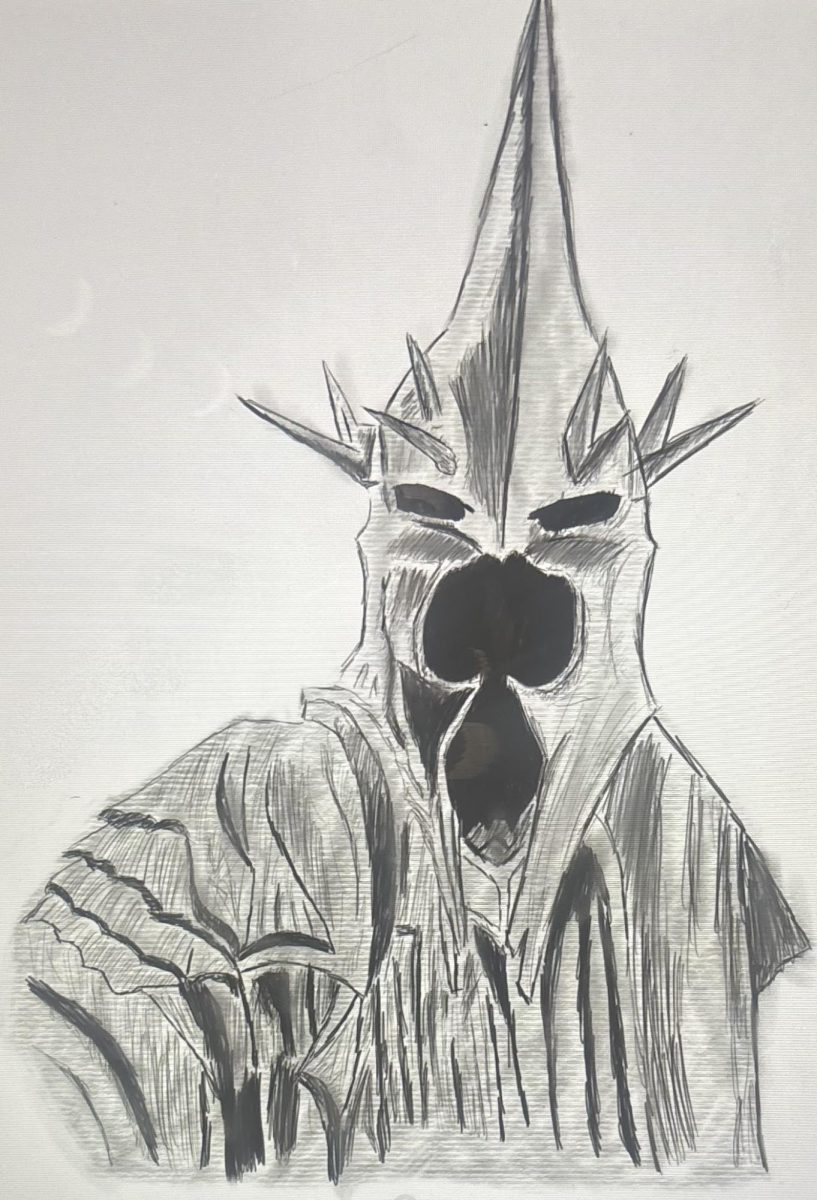
In my opinion, The Lord of the Rings possesses truly only one shortcoming: its lack of important female characters. In fact, the movies only have two entire instances of two women interacting only with each other, a sore flaw in an otherwise perfect trilogy. However, Tolkien did manage to write an extremely compelling female character: Eowyn. She is the princess of Rohan, but she desires the life of a warrior. When her kingdom goes to war, she dresses as a male soldier and even combats one of Sauron’s most powerful servants, the Witch-King of Angmar. As the evil Ring-Wraith fights her, he claims, “No man can kill me,” to which Eowyn responds while stripping off her helmet, “I am no man,” before stabbing him, ending his reign of terror. While the novel may lack in its quantity of female characters, it at least partially makes up for it in its quality.
In a time where hate is so widespread that it has simply become the norm on our TVs, at our lunch tables, and in our homes, the hope and passion in Tolkien’s masterpiece are sorely needed. While this quote comes from The Hobbit, its prequel, much of The Lord of the Rings can be summed up in a few lines: “Some believe it is only great power that can hold evil in check, but that is not what I have found. It is the small everyday deeds of ordinary folk that keep the darkness at bay. Small acts of kindness and love.”