
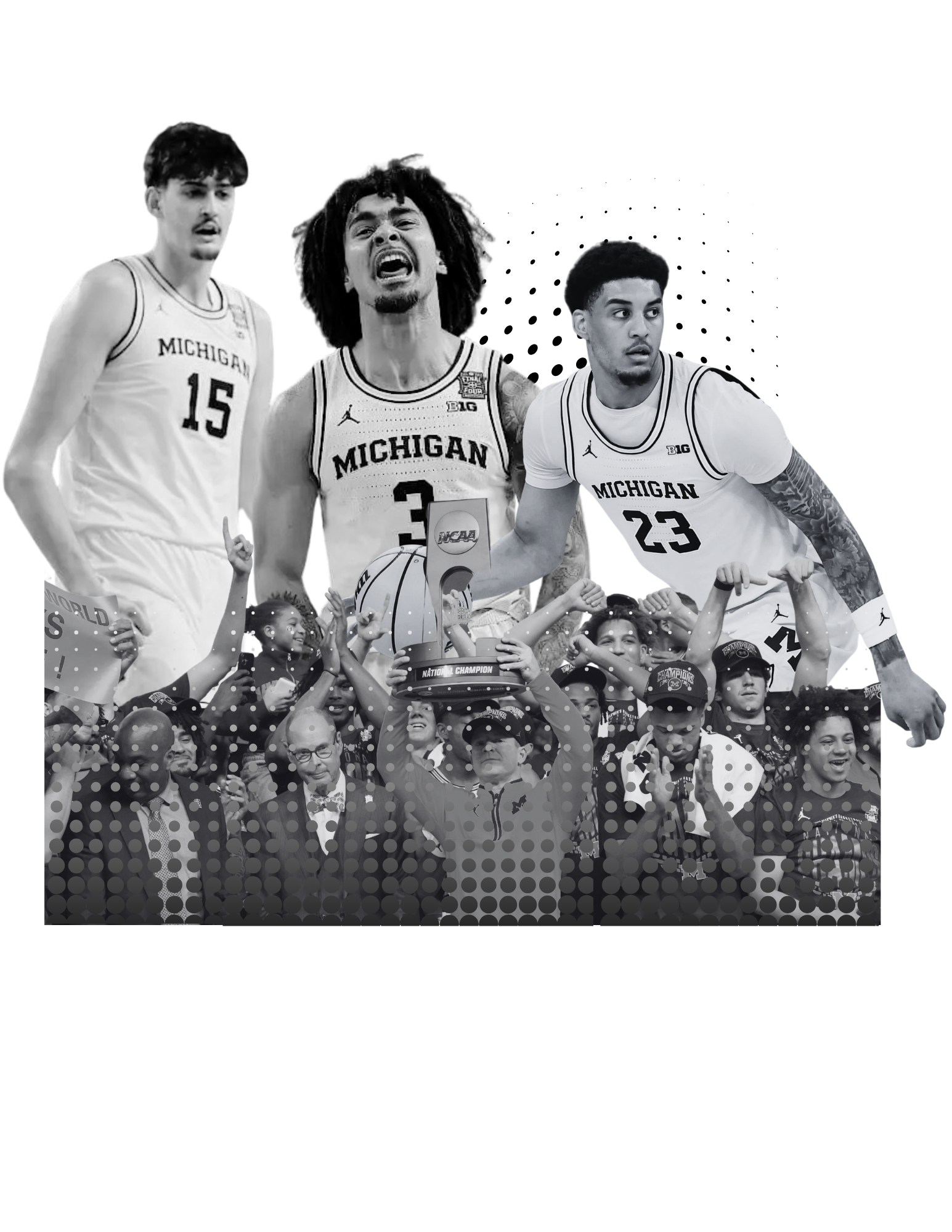
The 2026 NCAA college basketball season was one of the greatest in recent history, with unforgettable moments all around. There were many dominant teams all year-round, but one team really stuck out. The Michigan Wolverines. Michigan capped off this NCAA season by defeating the UConn Huskies to win their second national championship, their first since Glen Rice led the team in 1989. Coached by Dusty May, this Michigan team was destined for greatness after destroying the competition in the Players Era tournament in late November. Michigan’s dominance lasted all season. They went 19-1 in the Big Ten conference play along with an astounding 37-3 final overall record. Dusty May, regarded as one of the best coaches in college, after leading ninth-seeded FAU to the Final Four in 2023, put together a phenomenal, championship-caliber roster. It consisted of transfers such as the Big Ten player of the year, Yaxel Lendeborg, along with Aday Mara, and Morez Johnson. Michigan’s front court greatly contributed to their year-long dominance. Despite the talent, many people questioned Michigan’s guard play heading into the tournament. Guards are often the key to tournament success, so skepticism surrounded North Carolina first year transfer Elliott Cadeau. The concern was whether he could deliver in the biggest moments. The answer? A resounding yes. Cadeau not only silenced his doubters but also earned the Final Four’s Most Outstanding Player award. After sub-par performances and losing confidence toward the end of his time at UNC, it was remarkable to see him regain his form when it mattered most. This championship meant just as much to the fans as it did to the players. Die-hard Michigan fan Owen Swarbrick ’27 shared how much it meant: “It felt like the years of seeing Michigan basketball crumble from DiVincenzo and Villanova, or Johnny Juzang and UCLA, and even the horrible years of Juwan Howard. Dusty May was able to erase everything in just 2 years with his basketball mastermind.” However, not everyone appreciated Michigan’s approach to winning. Some critics took issue with their heavy reliance on the transfer portal rather than developing homegrown talent. Devoted Michigan State fan and severe Michigan hater Trevor Roman ’27 shared his frustration, calling the championship “a terrible and pathetic day for college athletics,” pointing out that Michigan’s starting lineup consisted entirely of transfers, including four new starters this season. A program like Michigan State, where players develop over time, learn the culture, and grow through shared experience, is what makes rooting for a team so entertaining. However, you can’t hate Dusty May for simply copying the popular trend and doing whatever it takes to build a five-star roster, which eventually led to a national championship. Like they say, ‘don’t hate the player, hate the game.’ Except, in this case it’s a coach and not a player.
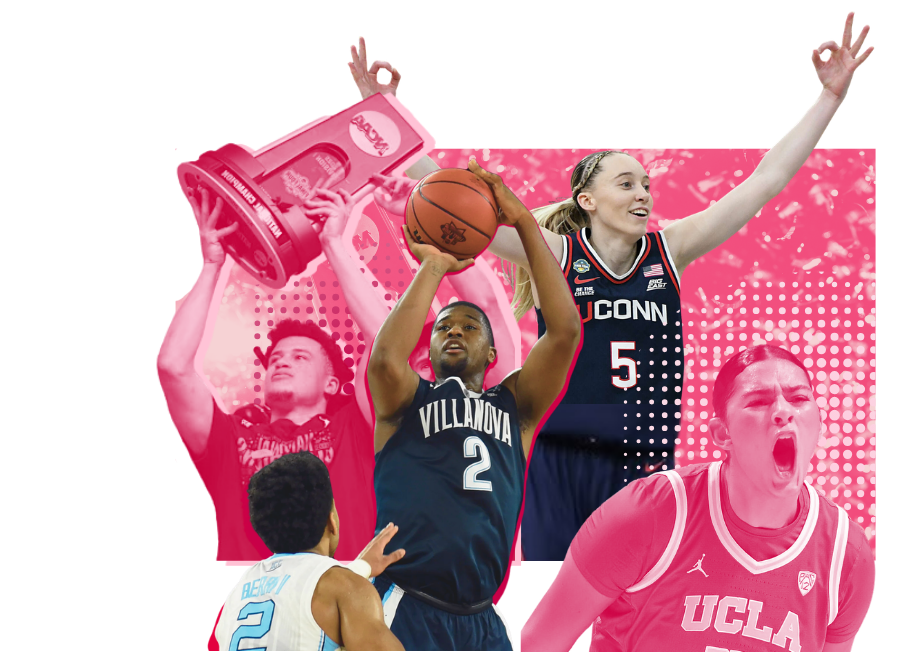
While Michigan claimed the title, various other elite players shared the spotlight in March. Duke freshman forward Cameron Boozer took home the Naismith Award for the National Player of the Year. Duke fan Aiden O’Quinn ’27 described the experience:
“It was so fantastic. Getting to watch generational talent like Cam was just something that you don’t always get to experience.” Despite his season ending in heartbreak, Boozer is widely expected to become an NBA star, following in his father’s footsteps. Boozer wasn’t the only standout freshman, though. In fact, this year’s freshman class may go down as the greatest in history.BYU’s AJ Dybantsa is projected to be the number one pick in the NBA Draft after averaging 25 points per game, the highest in the country. Without him, BYU likely would have been a bottom-of-the-barrel team in the Big 12. Kansas freshman Darryn Peterson also impressed many, averaging over twenty points per game in only 24 appearances. Arkansas freshman Darius Acuff put up 23.5 points and 6.4 assists per game, earning SEC Player of the Year honors. The depth of talent didn’t stop there. Some other notable prospects expected to be early picks in the 2026 NBA Draft: Illinois’ Keaton Wagler, who lead his team to the Final Four, Houston’s Kingston Flemings, who was the top scorer under Kelvin Sampson, Arizona’s lethal duo of Brayden Burries and Koa Peat, Louisville’s Mikel Brown, Tennessee’s Nate Ament, UConn’s Braylon Mullins, and UNC’s Caleb Wilson, whose season ended early due to a fractured hand. Widely expected to excel in the tournament, it was unfortunate that the fans couldn’t see what Wilson could’ve done in the Big Dance.
The NCAA Tournament itself was an all-time classic, filled with dramatic finishes and unforgettable moments. Games consistently came down to the wire, keeping every fan on the edge of their seat. One of the most thrilling moments came in the first-round matchup between Kentucky and Santa Clara. With nine seconds left, Kentucky’s Otega Oweh hit a tough layup to tie the game. Santa Clara responded with a go-ahead three by Allen Graves with just over two seconds remaining, seemingly sealing the upset. But Oweh had other plans. He launched a near half-court shot at the buzzer and nailed it, sending the game to overtime, where Kentucky eventually prevailed. With this shot, Oweh etched his name into the March Madness history books. Another memorable game was Nebraska vs Vanderbilt in the round of 32. The contest was a back-and-fourth battle, with Vanderbilt’s Tyler Tanner and Nebraska’s Pryce Sandfort trading big plays throughout. In the final moments, Nebraska freshman Braden Frager scored to give his team the lead with 2.2 seconds left. Vanderbilt had one last chance, but Tanner’s desperation three-quarter-court shot bounced off the backboard and rim. Had it gone in, it might’ve been the greatest shot ever. Even so, Nebraska celebrated its second tournament win ever and first Sweet 16 appearance in program history. Iowa also delivered a huge upset by defeating defending champion and No. 1 seed Florida in the round of 32. Transfer Alvaro Folgueiras hit a go-ahead three with four seconds left to secure the victory. Iowa continued its run by beating Nebraska to reach its first Elite Eight since 1987. First-year head coach Ben McCollum, who had been a Division II coach just two years prior, led this remarkable turnaround. His star point guard Bennett Stirtz followed him from previous stops at Drake, showcasing the strong connection between player and coach.
The madness didn’t stop there. Perhaps the most incredible moment of the tournament came in the Elite Eight matchup between UConn and Duke. UConn trailed by 19 points early in the second half but mounted an improbable comeback. With under ten seconds left and down two, Duke’s Cayden Boozer, twin brother of Cameron, turned the ball over and gave UConn one final opportunity. Freshman Braylon Mullins delivered, hitting a deep 35-foot three-pointer to win the game. The shot was not only difficult, but incredibly significant. When compared to legendary shots like Kris Jenkins’ championship winner or Ray Allen’s game-tying three in the NBA Finals, Mullins’ shot stands out for its combination of difficulty, pressure, and impact. It sealed one of the greatest comebacks in college basketball history, making it a moment fans will never forget.
In the end, the 2026 season truly was one for the records. It featured dominant team performances, generational individual talent, and a tournament full of unforgettable moments. The Michigan Wolverines, the most consistent and dominant team all year long, rightfully took home the championship. With next season only months away, college basketball fans are already counting down the days until tip-off, hoping for another year as thrilling as this one.