
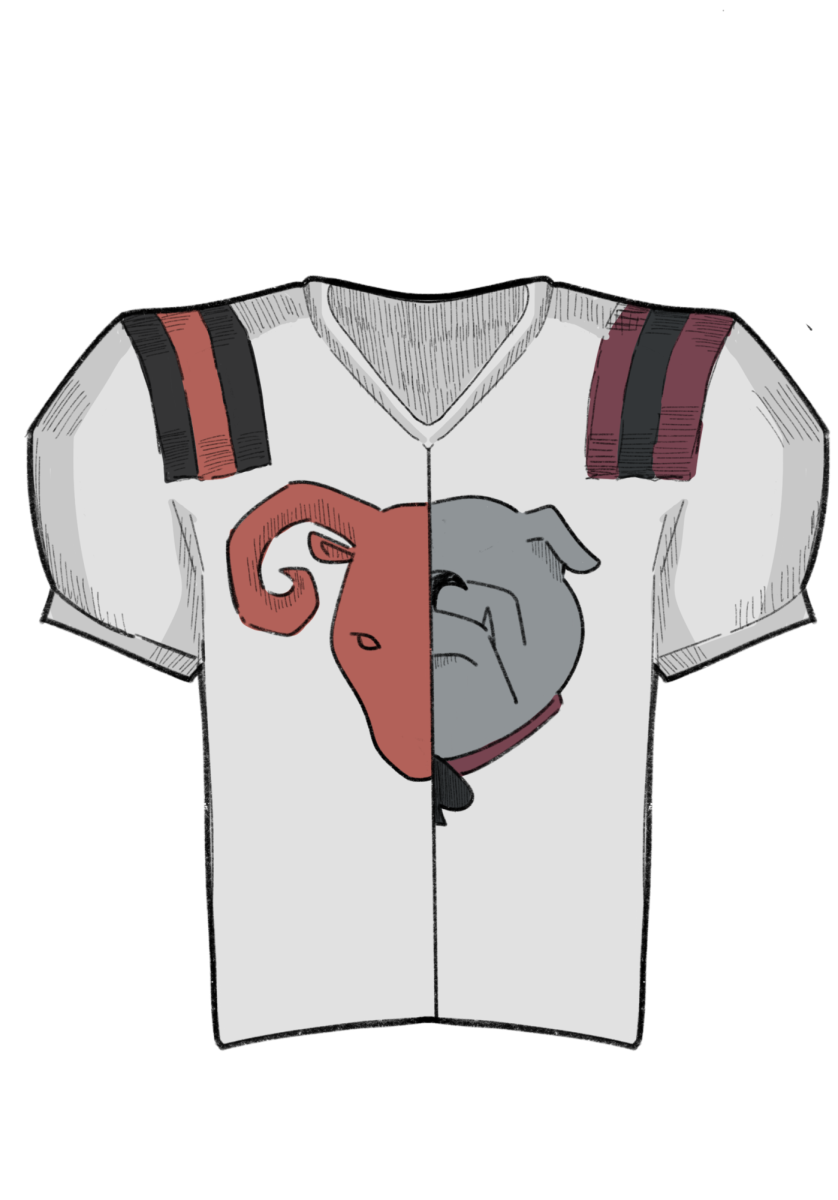
LM is a school where athletics thrive. Our sports culture permeates throughout the classrooms and hallways. Despite this fact, in recent years, LM’s football program has slipped in popularity due to a multitude of issues. Harriton High School’s team is similarly struggling to both attract players and find success on the field. Recently, an idea sparked by parents to combine the teams in order to combat the lack of football relevance in the district has garnered a lot of attention and popularity. However, when word of the issue arrived at LMSD superintendent Dr. Frank Ranelli, he made a recommendation to not merge the two teams.
There are a few key reasons why the merge even became a desired change, beginning with the lack of players. LM was unable to field a JV team this season, meaning that from the 30 athletes, both experienced and inexperienced players were forced together in competition at the varsity level. This problem stems from our district’s lack of youth football programs. In many surrounding districts, there are leagues and programs that encourage young players to participate in football. Therefore, many of these kids will develop their skills starting from a much younger age, giving them a competitive advantage against school districts such as ours. Reggie Tsiotsias ’28, a player on LM’s football team, is also concerned with this fact, noticing, “Every other school has a youth program for the kids and it helps their game. They are used to playing with each other and it translates over [to football games]. We don’t have that and it causes kids to play football for the first time in their freshmen year when they have never played with any of these kids before.” Without programs encouraging this interest and participation at an early age, most kids will choose other, more widely offered and accessible sports to play and compete in. Neighboring schools in the Central League, such as Garnet Valley High School and Strath Haven High School, have on average upwards of seventy athletes in their programs each year, contributing to their respective 8-4 and 10-3 records this season. On the other hand, LM struggled to attract players, forcing them to have a singular varsity team. Carl Brooks ’27, a member of the team, pointed out this issue, noting, “If you look at some of the top teams in the Central League, you will see that they have youth programs. Being able to get kids interested in the sport early on is crucial for building big and successful programs that everyone can enjoy.” This lack has greatly affected LM and Harriton’s football programs on a safety and talent level. More bodies are something the teams desperately need to increase their success.
Parents and players cite this as a major benefit that merged teams would provide. Player Yousuf Sajadi ’28 supports a merge because, “It will bring more players into the program.” Rather than two small and less experienced teams, LM and Harriton could together field a bigger and more talented joint team.
The other major concern that leads the drive for a combined football team is safety. Football is commonly regarded as the most dangerous sport, especially for youth. A lack of players in both the LM and Harriton programs is dangerous for the players for a few reasons. Mainly, smaller rosters mean that each player will get more playing time. While this is usually not a cause for concern or unhappiness, playing the majority of the snaps in a football game is dangerous for an athlete. It makes them more likely to be injured and also puts more strain on their already exerted bodies. Brooks expressed that, “Another problem that was very prominent this year was the lack of breaks many players have, as most varsity players had to play both ways. Football is a very physical sport, and the lack of breaks can lead to many injuries minor or major just because of fatigue. It is something that is troubling us players and the coaches, and hope that this is an issue the board can reopen.” These risks are exponentially increased when you account for the age and ability differences. Due to the singular-level team that LM has, undeveloped and inexperienced underclassmen are forced into competing directly against developed and experienced seniors, some of whom are committed to play at a collegiate level. Parents fear for the safety of their young children, who are playing at a level that they are not ready for, at both a physical and experiential level. There’s a very dramatic shift between middle school level football and varsity level, and jumping straight to the top poses risks.
Safety can also be linked back to the lack of player interest in football at LM and Harriton and the decline in youth football across the country. More research has been emerging recently about the physical dangers of the sport, including head injuries and the brain disease chronic traumatic encephalopathy (CTE). This has led to fewer parents enrolling their kids in football programs. Wealth and income also play a critical role in football’s prevalence in an area. In less wealthy districts, sports like football are a great opportunity for student athletes to seek an athletic scholarship, helping them to secure a secondary education that might have been otherwise unavailable. Many parents in these neighborhoods view this as an attractive opportunity and overlook the potential safety risks. This isn’t the case for LMSD. Our district is affluent compared to a lot of surrounding districts, meaning that a much higher percentage of families would be able to afford sending their children to college without a scholarship. Thus, in areas such as the one where LM and Harriton are located, fewer kids play football, instead choosing safer and more available sports. Without a stronger youth football program infrastructure, this issue will not likely change, meaning that LM athletes in football will continue to decline.
Despite this evidence clearly supporting a merge, there are a few points made by the superintendent and by players that cannot be overlooked in the decision. In a survey conducted, it was found that team identity and culture were big factors in the players’ opinions. Merging the two teams would result in the loss of traditions such as LM and Radnor High School’s rivalry and the individual school’s team culture. In Ranelli’s statement, as reported by the Philadelphia Inquirer, it was found that “95 percent of Lower Merion High School football players rated ‘having their own school team [as] important,’” and 74 percent of Harriton players “want to maintain the program at their school.” Parents and players supporting the merge have countered this point with the logic that new traditions will form and that attendance and support will likely increase. LM athletes would be able to experience Friday night under the lights games at Harriton’s field, something previously unavailable due to Arnold Field’s lack of lights. This would encourage more students from LM to support the football team and build the school culture around the fun tradition.
Ranelli also based his suggestion on the team’s future playoff opportunities and records. This season, LM finished with a 4-7 record, and they were the owners of a 1-10 record last season. Harriton has not performed as well as LM, going 1-9 this year and 0-10 last season. It can be seen that combining the two teams would be more of an advantage to Harriton than of benefiting them both. Another important aspect is that the merge would likely make the new team ineligible for playoffs, a goal that would be unavailable for the athletes. Ranelli explained this, saying, “I don’t feel it’s [LM’s] responsibility to give up their team identity … and playoff chances to merge with Harriton,” Ranelli said. “Lower Merion High School would be giving up a great deal for a problem that they do not need to solve.” However, many of the players on LM’s team support the merge, and feel they would greatly benefit as well. A freshman who wished to remain anonymous believes that, “Merging the teams would lead to more variety [among players] and an overall better LMSD football team.”
The decision to merge LM and Harriton’s football teams would have drastic impacts on the athletes, parents, schools, and district as a whole. Many components will factor into the opposing sides, including safety, player interest, and culture. Despite the recommendation from the superintendent, the issue is far from resolved, with both parents and athletes from both schools continuing to lobby the school board to take a vote.