

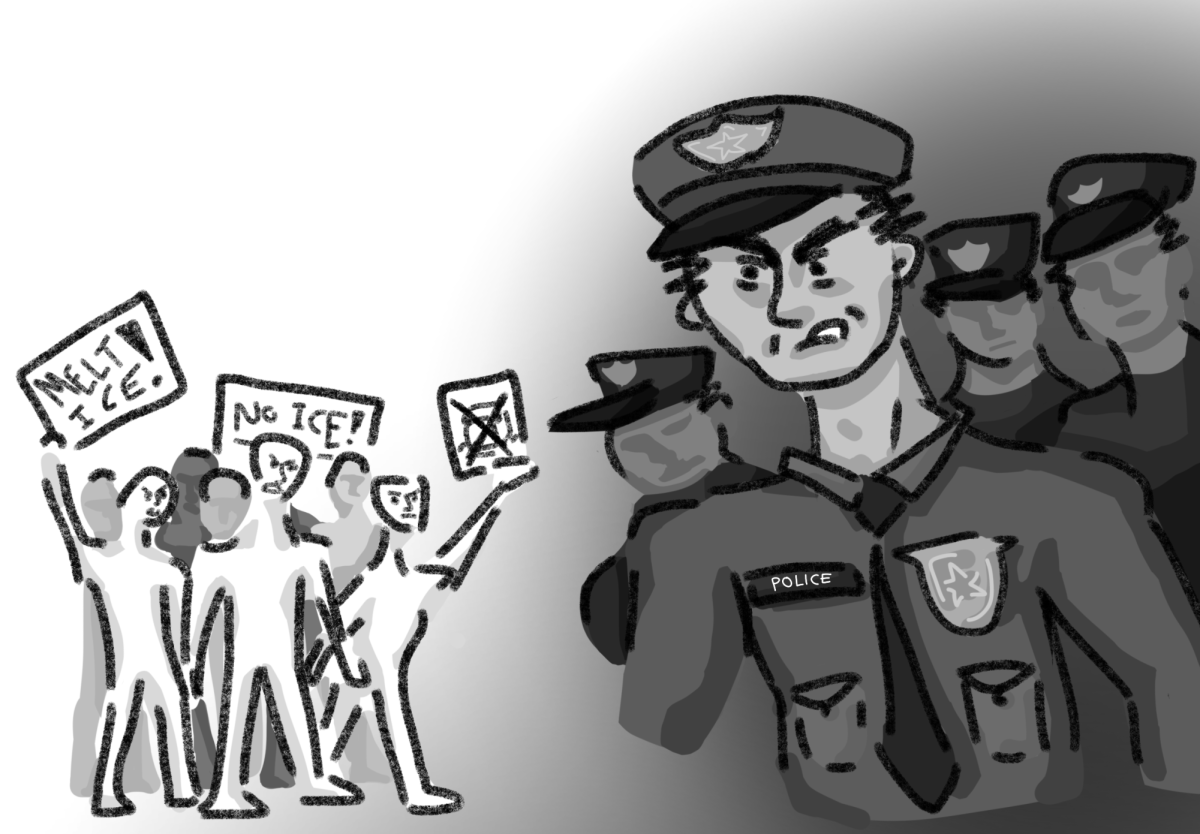
On February 19, students in Quakertown, Pennsylvania, walked out in protest of ICE. This activity, although with pacifistic intentions, quickly escalated into a complicated situation involving police brutality. While walkouts can serve as a symbolic protest method, it’s important that they’re done peacefully and with a clear purpose. Students should organize walkouts well ahead of time in order to maximize student and civilian safety, deliver a consistent message, and diminish negative consequences from law and school administration.
When considering the concept of a school “walkout,” critical thoughts may arise: Should students be walking out at all? What effect does it even have on the cause? Walkouts are a specific form of protest that involves spontaneously leaving a workplace to demand change for a certain cause. While they definitely gather the attention of police and government officials, the ending result is at most a heightened awareness surrounding the topic and less action. What these protests normally produce are student suspensions and immediate disciplinary actions, leaving those involved simply punished and with a failed protest.
Although many students across the globe see no problem with the unique method of protest, aspects of the strategy pose a few interesting questions, such as the long-term effects of walkouts on their respective issues and whether the lack of clear demands diminish the original rationale. There is an answer to all these inquiries, but most of them fall in a gray area. Walkouts do not change anything in the long run. Because they are mostly student-run, and the ultimate power lies with federal officials and lawmakers, the actual change made is meager. The “lack of clear demands” mentioned earlier is situational. Depending on what the students choose to do following the walkout, it’s very plausible that concise commands can be made. For example, if students walked out and then participated in another protest or march, that would show a genuine desire for concrete action. Elliotte Rendle ’29 commented “I think that walkout protests for schools aren’t a good form of protest at all. The only real impact they make is some kids skipping school instead of protesting the real problem. It’s as if you are protesting school itself.”
However, contrary to popular belief, school walkouts do not have to end in chastisement. Those that do are often poorly organized and the result of decisions made by poorly coordinated efforts. While it’s true that a large portion of the protest depends on the students’ ability to organize themselves, the school’s administration should also play a role in addressing the event through helping students arrange a time to structure the protest. The students running the event should communicate maturely with adults in leadership positions, such as principals or superintendents at their school. Organizing unmoderated school events will not just cause trouble with higher authorities but also deplete the attendance of the student body. It’s important to banish any mindset that collaborating with teachers and other administrators will hurt the cause, when in reality, it draws the attention of more people, helping the movement and gathering momentum. Communicating effectively with supervisory figures prior to the event can also prevent misunderstanding about the purpose of the walkout. This also ensures that the motivation of the protest remains the cause rather than what rules are being violated. Vivian Haggerty ’29 stated, “I think a proper walkout should be organized and advertised properly so people actually know about it.”
The Quakertown walkout in protest of ICE made it abundantly clear that without the proper preparation and organization, walkouts can quickly spiral out of control. In order to create a successful walkout, specific measures must be taken. Students should not try to organize walkout protests without the approval of administration and should instead opt to advertise their regime and coordinate alongside adults. By planning responsibly, students will be able to assert their opinions whilst maintaining a safe environment and peaceful protest.