
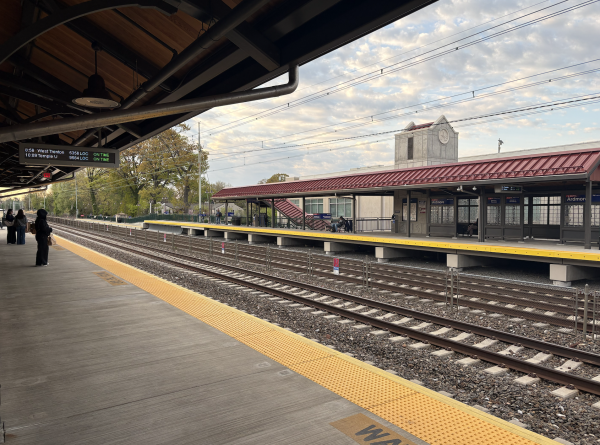
After nearly seven years of construction and delays, March 23 marked the official and full reopening of Ardmore Station. Its newly resuscitated infrastructure marks a significant milestone for commuters, local businesses, and students and teachers at LM. Located near Suburban Square, the station serves as a key connection point between SEPTA regional rail lines and Amtrak service, linking the township to Philadelphia, Harrisburg, and New York City.
After a fire burnt down the original station in 1952, a temporary station at Ardmore has been used ever since. By 2019, the increasing demand at the station had led to SEPTA approving $59 million to revitalize it. These renovations, at the time set to last two and a half years, were an attempt to make the platform more accessible and viable for larger patronage. They came with a broader effort from SEPTA to rehabilitate older stations in addition to bringing them into compliance with the Americans with Disabilities Act (ADA).
Yet, construction faced several issues that ultimately led to the station fully opening last month, four years later than expected. The COVID-19 pandemic hit months after construction initially began, leading to supply chain issues and work stoppages that inhibited further development. According to Len Nardone, SEPTA’s chief of capital programs, crews also faced challenges with the decaying infrastructure and crumbling walls of the old platform that had called for a complete redesign of certain features of the station. Further issues revealed themselves the day prior to its official opening, when a worker had gotten stuck in the newly installed elevator.
For local businesses, the impact was “horrible,” according to pet grooming store owner Robyn Axner-Davis. The construction had necessitated the closure of the ninety-car Ardmore Station parking lot that many shop customers had relied on. Ten businesses, according to Alec Hersh with the Downtown Ardmore District, were “directly impacted by the construction of the station.” At times, crews had also closed down portions of large roads such as Station Road and Anderson Avenue. The inability for cars to reach and park near these businesses had made customers move elsewhere and caused owners to lose a significant portion of their revenue and even face the threat of closing down.
For students and teachers at LM, the reopening allows them access once again to a more straightforward and quicker form of transit. The school’s proximity to Ardmore Station has long served as a convenient means of getting to school, extracurricular activities, or being able to participate in jobs and activities located in Philadelphia. The return of more available and direct rail connections provides students a greater and cheaper access to the resources that were previously less accessible during the station’s closure. The convenience of a nearby, fully functioning station reduces dependence on car travel and makes participation in after-school and weekend commitments in the city more feasible.
SEPTA states that these new renovations will not only make the station more accessible but will also provide a greater protection from the elements and help fasten boarding. The upgrades also improve connections with local bus routes and Amtrak lines that go out-of-state, “facilitating intermodal transportation in the region.”
With Ardmore Station now fully reopened after years of delays and disruption, the project stands as a long-awaited restoration of a key transportation hub that carries significant effects for the LM community. While completion of the project signifies a respite from the prolonged construction defined by project delays and infrastructure redesigns, the closure’s repercussions continue to affect local communities.