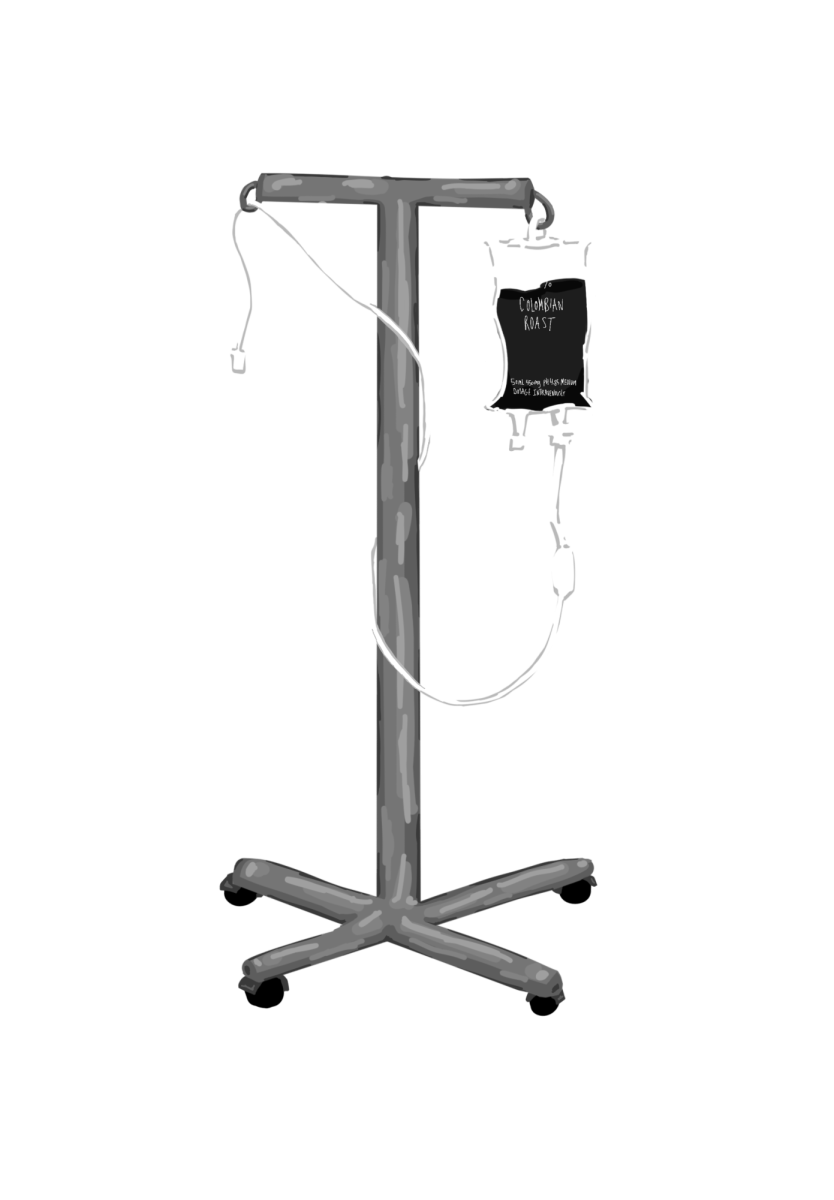

Each school year, seniors leave at the beginning of May in order to pursue their senior projects. LM is unique in that it allows students to be exposed to a vast spectrum of interests during this month-long independent study. As such, senior projects can take on a vast variety of forms: life-skill training such as cooking, internships in labs and hospitals, or creative ventures such as drawing or painting. The goal of the project is simple: to encourage creativity and foster independence in students. But is it accomplishing that goal, and how?
While interviewing LM seniors, I was impressed by their range and resourcefulness. Some students chose to take advantage of the opportunity to reconnect with their culture; others were exploring hobbies that they may usually not have time for, expanding their own passions, or adding valuable entries to their resumes. The following descriptions are, of course, not fully representative of the entire student body, but are just a few ways that students have demonstrated their ability to take full advantage of the opportunity provided by the senior project.
The slot of “free” time offered by the senior project is perfect for in-detail artistic endeavors. For instance, James Potter ’26 is making a short film with the help of his film school graduate cousin to explore elements of sound and cinematography. Aerynne Cannan ’26 will be working with a woodworking shop in Downingtown to make small products such as spoons and bowls and learn a new medium. Others, like Audrey Gardner ’26, are taking this chance to finally complete long-desired passion projects. Specifically, Gardner will be illustrating and creating a segment of a graphic novel.

Some students are attempting to bolster their current knowledge on school topics by working with outside experts. Florian Shah ’26, under the tutelage of classics professor Ashley Francese from Dickinson College, is translating a plethora of Latin texts. Shah is trying to “to derive a more artistic translation [than that found in Latin class] without sacrificing the literal meaning.” He also wants to focus on a more feminist Latin point of view. Shah commented, “I think it’s cool that women were writing in ancient languages and it actually survived and we get the opportunity to interpret them. Typically, due to historical misogyny and the paucity of texts that survived in total, we don’t really get these types of records.” Likewise, Brigid San Chirico ’26 is working with a Villanova professor to research gender studies and Christian theology development. Senior project gives students the ability to explore materials that may not be introduced or wholly analyzed in class.
Senior projects are also a perfect time for internships and STEM-oriented ventures. Ada Onder ’26 is further developing her expertise with AI models by learning more about the behind-the-scenes functions and how they apply to large technology models. Meanwhile, Maryam Khan ’26 will be shadowing a nurse, and Myla McClinton ’26 is working with a pathologist to determine how clinicians make accurate diagnoses and discover the equipment utilized.
Students are also focusing on other subjects as well. Sarah Aagard ’26 is joining Meredith Johnson’s kindergarten class at Merion Elementary and Claire Evans ’26 is shadowing Nicole McCarron, a second grade teacher at Cynwyd Elementary. Ben Folk ’26 is going backpacking in Shenandoah with a Penn Medicine neurosurgeon. Here are just a few more: publishing their own book, making a board game, creating a Go-Kart, interning at the Walnut Street Theater, working with a political campaign, and studying the lives of ancient Native Americans.
Advisors, having experienced years worth of senior projects, also have their own perspective. Carl Cortez, a mathematics teacher, oversaw his first senior projects over Zoom during the COVID pandemic in 2020. Cortez suggested that LM could highlight the opportunities within the building itself, specifically the rewards and benefits that come with a career in teaching. Most senior projects are focusing on expanding students’ purview outside of the LM building. Additionally, even other events that could highlight high school teaching as a career path don’t tend to. Cortez commented, “[Even during] the career symposium here, there’s almost never an educator speaking about their work.” In order to accomplish this, LM could offer more seniors the opportunity to be teaching assistants and witness the behind-the-scenes.
Of course, there are students willing to abuse the freedom of choice offered by senior project. But Brooke Fireman, a Latin teacher, made a few suggestions to ensure students fully take the opportunity provided. “I think every opportunity should be community involvement; anything outside of that purview needs to run through a proposal phase.”
Oftentimes, criticism towards LM comes in the form of pressuring concepts like rote memorization and “teaching to the test” onto students and staff. Senior projects are a refreshing change to the sometimes restrictive school environment, by, as Potter put it, “let[ting] students loose and tak[ing] off the training wheels.” But how can we improve the process? Some, like Cannan, say that senior project should be introduced sooner “in order to make arrangements for internships and other in-advance commitments.” Many cited that it can be difficult to brainstorm and select what topic to focus on in a short period of time. Overall, 62.5 percent of respondents on a survey sent out to LM seniors voted for an earlier senior project start date. This data makes sense when analyzed within the context of the student body.
The range of topics that students want to explore means there are different requirements for securing their desired opportunities. For example, those who are interested in interning at a lab or medical center need to send in forms and secure an official post months in advance. Others, such as those who are continuing with current projects, may not need as much time as they can rely on already formed connections.
Additionally, being out of school is not synonymous with being free of school obligations. During the senior project slot, seniors who signed up for AP testing still need to come in to take their exams. Khan commented, “I don’t have time to study for AP tests.” Additionally, some students, like Evans, say they “[don’t] want to lose valuable time” working on their senior project. This issue is not just impacting just a few students. In fact, 56.3 percent of respondents stated that the overlapping AP and project schedules complicated the process for them.
Some commented on the mentor requirement portion of the project. Nate Promer ’26 said, “Most people are just finding someone who they know won’t care,” he says. “The mentor is an obstacle for people who want to learn skills that are better taught on the internet.” For example, Promer’s project revolves around learning how to sample music, a skill whose “ideal mentor is YouTube.”
Another aspect that may be lacking from senior projects is opportunities for student collaboration. What if students were provided with group opportunities? Perhaps LM could utilize its connections to the neighborhood, companies, and alumni to create group activities such as collaborating at an art studio or, as mentioned earlier, a community outreach endeavor.
In school, we live by the bell. We sit down, we walk the same route, we listen to the same teachers. We repeat the same schedule over and over again for four years. But senior projects allow us to venture outside the classroom and decide what we want to focus on. It’s about fostering our independence and our ability to branch out and gain a greater perspective. Our time at LM is coming to an end after all and senior project is a chance to experience what could be next. Of course, senior project has room for improvement, but that’s a fact true of any program. So, to any juniors or underclassmen reading this article, hopefully this piece will get you excited for the prospect of the senior project and even help you when coming up with your own venture.