
There is no doubt that LM beats Radnor. Not only did we win the rivalry game this year (let’s go Aces), but since late January, Radnor has been in the middle of a scandal unlike anything we’ve seen in our area. A student was charged in a case involving AI-generated images of several female students in a non-consensual, sexual nature. The crazy stories about AI being used for nefarious purposes, the dystopian parallels that have been laughed at, now hit a little too close to home. How did we get to this point? How could anyone think this was an appropriate use of artificial intelligence? And what happens now?
Deepfake AI isn’t like asking ChatGPT for help with math homework. When the internet talks about deepfakes, it’s typically in a comedic sense: making a celebrity do or say something funny, turning a political figure into a meme (think Trump’s posts on
the White House Instagram account), or even taking your friend’s voice to say something insane or provocative. This is where students interact the most with deepfakes: “low quality posts on Instagram for laughs,” as Philip Reynolds ’26 calls it. They’re funny because we know they aren’t real, and it seems fairly harmless when it’s a distant public figure or someone who’s in on the joke. “The use of deepfake for humor is really funny,” says Joe O’Gara ’26, “but how do you control if you use it for humor or evil?”
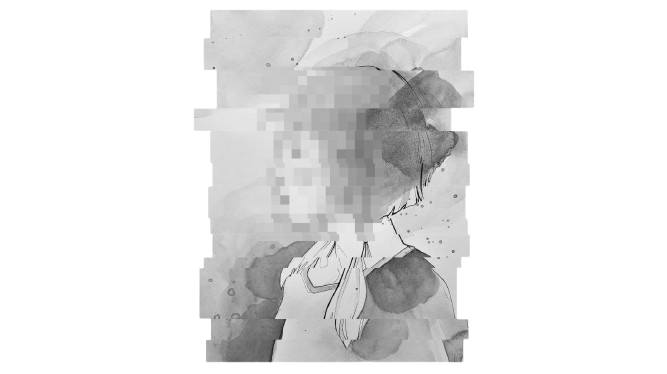
And he’s right. AI is always developing, always getting better. Deepfake influencers are everywhere now, marketing and lip-syncing. They’ll take a TikTok video of someone’s appearance, voice, or actions, and use that data to create fake content. Besides the fact that this takes away from the original creator, it’s disturbing. When you publish yourself online, any aspect of it is now not only seen by the world but can be stolen and exploited without your consent. And exploitation seems like a stretch—until you consider those in the Radnor videos, whose appearances were twisted unconsentually by a machine that will not hesitate to deform and defame its subject.
Knowing that something so dystopian happened in a community so alike ours has been jarring to LM students. “It’s horrifying,” says Alexa Richards ’27. “What the kid did was abhorrent,” declares Reynolds. “I thought it was crazy, really disturbing,” Enzo Bellomo ’26 expresses. Others felt like it was, more than anything, a sign of the times. “It’s just like, expected, especially for kids,” Samantha Berdow ’27 admits. “I feel like it was going to happen one way or another, and it’s horrible that it happened, but with how much AI is progressing now, I feel like it was bound to happen.” Students like O’Gara look at it as a wake-up call for other deepfake content: “I’m starting to question what I believe I see online,” he comments.
AI is still a confusing and case-specific topic when it comes to our district. While they have recently encouraged students to use AI as a study tool with Notebook LM, using AI to write essays, complete homework, etc. is strictly prohibited. Obviously, teachers won’t hesitate to flag your writing for plagiarism or generative content. You’ve stolen someone (or something) else’s words. But what about a stolen image, a stolen identity? While LM thankfully hasn’t faced a deepfake case amongst its AI battles, students have mixed opinions on the actions they would take. “Honestly I don’t know,” Grace Yin ’26 discloses. “Based on things in the past, I don’t think very much would happen.” Bellomo disagrees, saying, “The district is pretty strict with a lot of things, so I think they would have a pretty strict course of action with something like that.”
These what-ifs may seem farfetched, but sadly, they are questions administrations, parents, and students are now forced to face. We can refute what deepfakes symbolize, a publicization of image and identity, but they aren’t going away any time soon. How do we protect the privacy, the ownership of an image and identity, of students in a world where privacy is hard to come by? “We all have responsibility,” explains Reynolds. “We all have power at the tips of our fingers.” As a school and community, we must strive to be an environment that may encourage and explore new technology while setting strict boundaries on ethics and privacy. Within Radnor’s AI policy, the conclusion sentence reads, “We believe in harnessing the power of Artificial Intelligence alongside Human Intelligence to prepare our students for an evolving and unpredictable future.” Deepfake may very well be the epitome of AI’s dangers, but it can also be the catalyst for these necessary discussions and boundaries.